Suspense fallback
Loading
Preparing pagePlease wait1%
CodeDesignShip
Preparing a focused brutalist interface for projects, skills, writing, and product work.
Suspense fallback
Full-Stack Development + 2026-06-12 + 10 min read
How to plan practical API integrations in Next.js and Prisma projects, from data modeling and validation to admin workflows, email, analytics, and deployment.
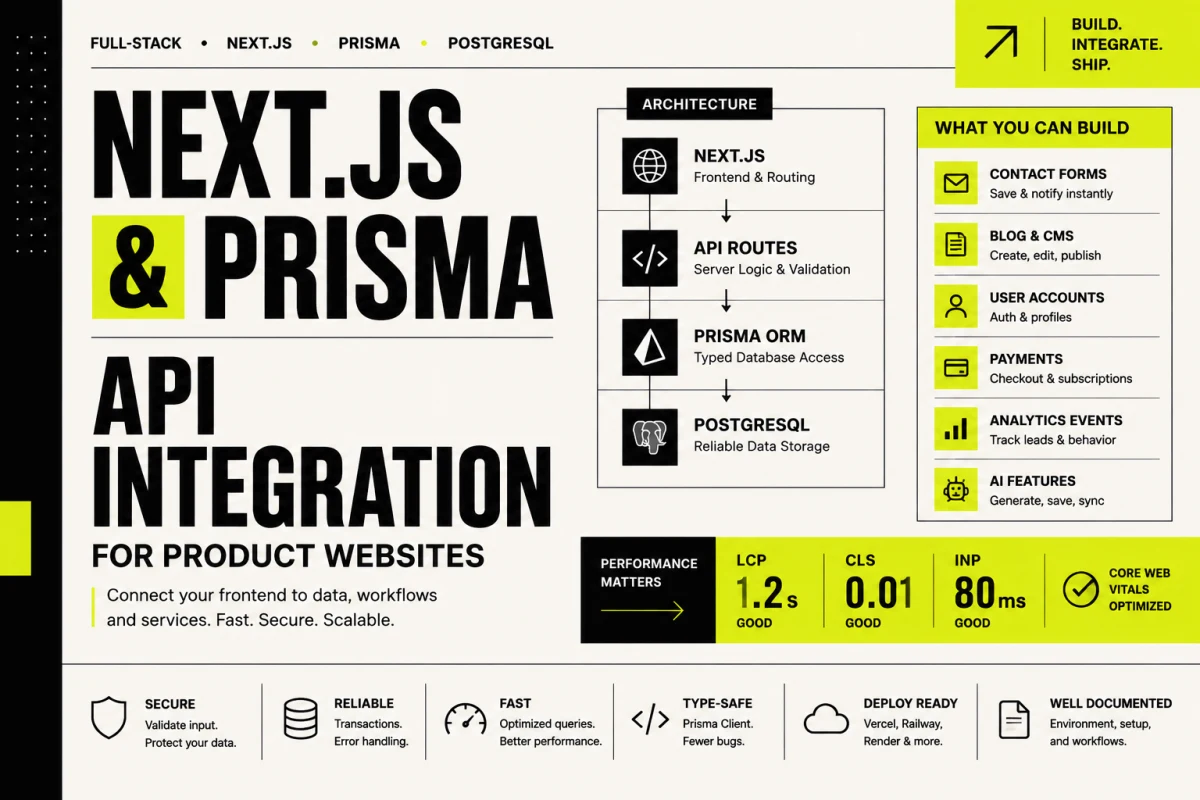
Many product websites eventually need more than static pages. A landing page may need a contact form. A portfolio may need a blog. A SaaS marketing site may need newsletter capture, payment links, analytics events, or a small admin workflow. This is where API integration becomes part of the product experience.
Next.js and Prisma are a practical stack for this kind of work. Next.js handles routing, rendering, metadata, API routes, and deployment. Prisma provides a typed database layer for PostgreSQL or other supported databases. Together, they help a small product move from a simple website to a useful system.
Before writing an API route, define the workflow. A technical integration should support a clear action.
Examples include:
The workflow decides what data is required, what validation is needed, what can fail, and what the user should see afterward.
Prisma works best when the data model is clear. For a product website, the model may include posts, projects, leads, messages, users, assets, view counts, or subscriptions.
Good schema design answers:
Small schema decisions matter later. A missing unique slug, unclear published flag, or weak timestamp model can make content and admin features harder to maintain.
Every API integration should validate input. Frontend validation improves user experience, but backend validation protects the system.
For a contact form, validation may include:
For admin workflows, validation may include slug format, required metadata, image paths, tags, and publish status.
Validation should return useful errors without exposing sensitive implementation details.
Many product websites integrate with external services:
These services can fail. A good integration handles timeouts, invalid keys, network problems, and partial success. For example, a contact message might save to the database but fail to send an email notification. The system should make that state understandable instead of silently losing the lead.
API integrations usually depend on environment variables. Missing or incorrect variables are a common deployment problem.
Document:
Good environment documentation saves time when moving a project from local development to production.
An API response is part of the user experience. A failed request should not leave users confused.
For frontend screens, include:
For admin tools, include enough detail for the operator to understand what happened. For public users, keep messages simple and safe.
API integrations should be tested end to end. It is not enough to check that the UI looks correct.
Test:
This kind of testing catches the small issues that often appear only after launch.
Not every product website needs a large backend. Many projects benefit from a small, well-built workflow.
Useful first integrations include:
The best integration is the one that supports a real business need without adding unnecessary complexity.
Next.js and Prisma are a strong combination for product websites that need practical full-stack features. The key is to begin with the workflow, design the data model carefully, validate input, handle external services honestly, and test the full path before launch.
API integration is not just backend plumbing. It is how a website becomes useful, measurable, and easier to operate.
Common integrations include contact forms, email notifications, payments, authentication, analytics, CMS content, AI features, admin dashboards, and third-party data sync.
Prisma gives a typed database layer for Next.js projects, making it easier to model data, query PostgreSQL, and keep backend code maintainable.
You should test validation, error handling, successful requests, failed requests, database writes, email or third-party side effects, environment variables, and production deployment behavior.
Have an idea or project?
Let's build something amazing.アイデアやプロジェクトがありますか?素晴らしいものを一緒に作りましょう。