Suspense fallback
Loading
Preparing pagePlease wait1%
CodeDesignShip
Preparing a focused brutalist interface for projects, skills, writing, and product work.
Suspense fallback
Freelance Development + 2026-06-05 + 10 min read
A client-friendly checklist for freelance web development handoff, covering source code, deployment, documentation, environment variables, analytics, SEO, and maintenance.
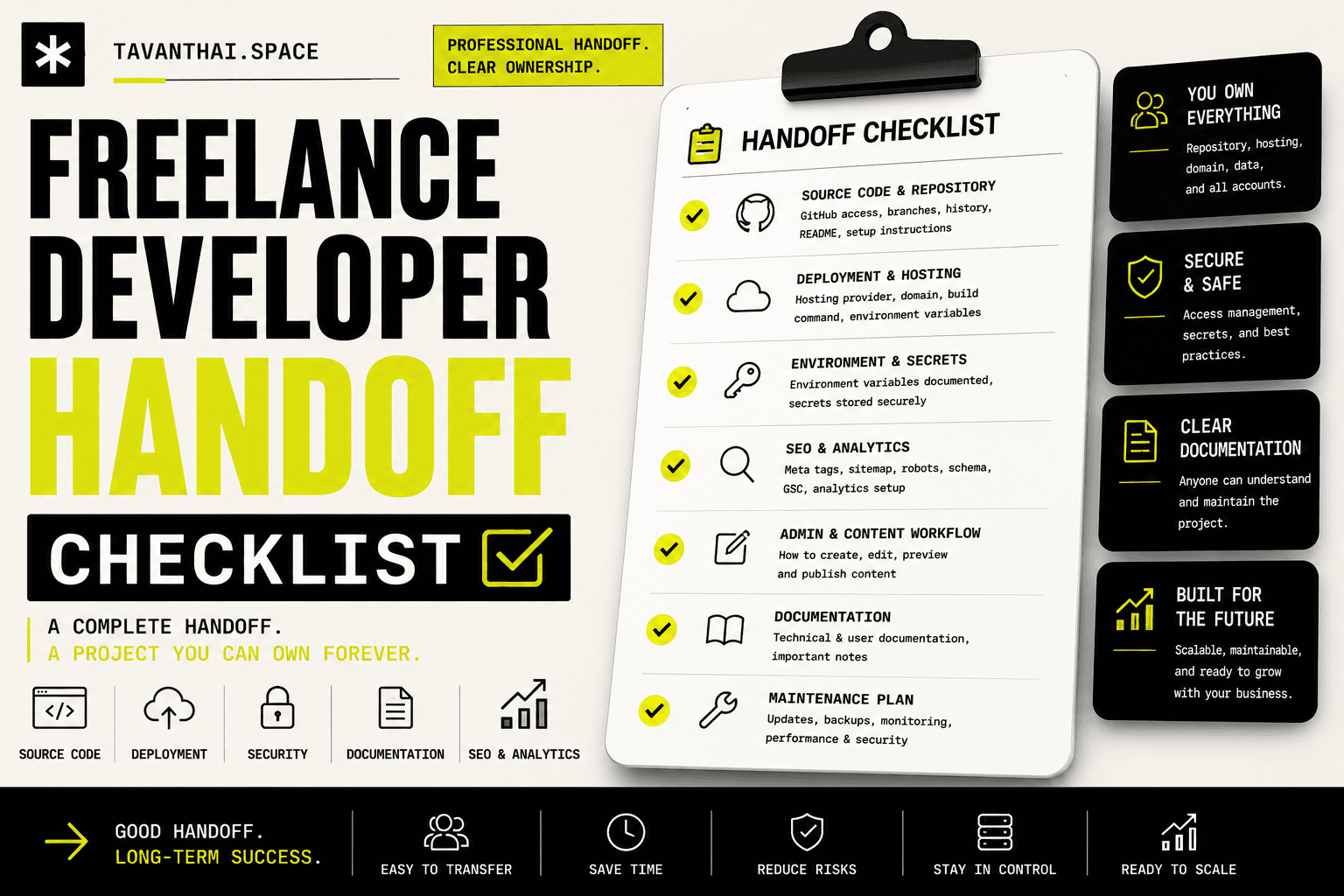
A web project is not finished when the last page looks good. It is finished when the client can own, run, and maintain the product. Handoff is the difference between a professional freelance project and a fragile delivery that only works on the developer's machine.
If you are hiring a freelance developer, ask about handoff before the project starts. Good developers are not afraid of clear ownership. They know that source code, deployment, documentation, and access management are part of the job.
The client should usually own the GitHub repository or organization. The developer can be added as a collaborator. This prevents problems later if the business changes developer, agency, or internal team.
At handoff, you should receive:
For a Next.js project, the README should explain how to install dependencies, run development server, build production, and deploy.
The client should know where the website is hosted and how deployment works. If the site runs on Vercel, Netlify, Railway, Render, or another platform, the client should own the account or have admin access.
The handoff should include:
This information is critical. Without it, a small issue can become expensive because nobody knows how production works.
Environment variables should never be pasted into public documentation. But the developer should document what variables exist and where they are configured.
For example:
Code block
DATABASE_URL=stored in hosting dashboard
NEXT_PUBLIC_SITE_URL=public website URL
EMAIL_API_KEY=stored in email provider account
The client should own accounts for database, email, analytics, payment, AI providers, and domains when possible.
If the project includes SEO, the handoff should mention:
This is especially important for content platforms and business websites. SEO work should not disappear into code with no explanation.
If the project includes a CMS, database admin panel, or content publishing flow, the client should receive clear instructions:
For a Markdown-based blog, the developer should explain where files live and how frontmatter works. For a CMS, the developer should explain content models and roles.
Every website needs maintenance. Dependencies change. APIs update. Hosting platforms evolve. A professional handoff should include maintenance recommendations.
That might include:
Clients do not need to become developers, but they should understand what keeps the system healthy.
Good handoff protects the client. It makes the project maintainable, transferable, and professional. If you are hiring a freelance developer, ask for handoff deliverables before the work begins.
A developer who can explain deployment, ownership, documentation, SEO, and maintenance is more valuable than someone who only sends screenshots.
Source code, deployment access, setup instructions, environment variable documentation, SEO notes, analytics details, credentials, and maintenance recommendations.
The client should usually own the repository, domain, hosting, analytics, and payment accounts. The developer can be added as a collaborator.
It helps maintain the project, onboard future developers, recover from issues, and understand how production works.
Have an idea or project?
Let's build something amazing.アイデアやプロジェクトがありますか?素晴らしいものを一緒に作りましょう。